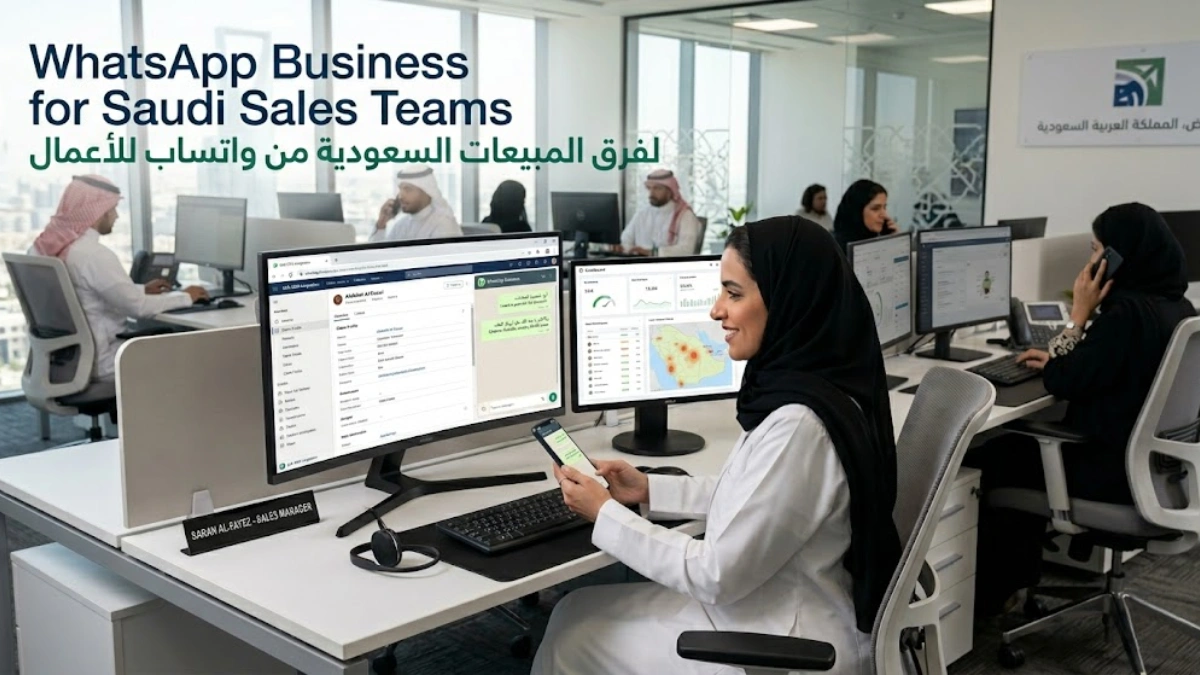
In Saudi Arabia, WhatsApp is not just a messaging app it is the backbone of daily business communication. Sales teams across industries such as real estate, retail, automotive, healthcare, logistics, and B2B services rely heavily on WhatsApp to communicate with customers, send quotations, follow up on leads, and close deals quickly.
At the same time, CRM (Customer Relationship Management) systems are becoming essential for managing structured sales pipelines, tracking customer data, and improving conversion rates. When these two systems CRM and WhatsApp Business are integrated, Saudi sales teams gain a powerful advantage in speed, visibility, automation, and customer engagement.
This article explains how CRM integration with WhatsApp Business works, why it is important in Saudi Arabia, key features, benefits, challenges, use cases, and implementation strategies for 2026.
Why WhatsApp Dominates Sales Communication in Saudi Arabia
WhatsApp is the most widely used communication tool in Saudi Arabia because:
- High smartphone penetration
- Instant messaging culture
- Strong preference for Arabic communication
- Fast response expectations
- Easy sharing of files, images, and documents
Sales teams use WhatsApp daily for:
- Sending quotations and invoices
- Sharing product catalogs
- Lead follow-ups
- Appointment scheduling
- Customer support
- Negotiation conversations
However, without CRM integration, all this communication remains unorganized and difficult to track.
What Is CRM Integration with WhatsApp Business?
CRM integration with WhatsApp Business means connecting WhatsApp conversations directly with a CRM platform such as:
- Salesforce CRM
- HubSpot CRM
- Zoho CRM
- Microsoft Dynamics 365
This integration allows businesses to:
- Store WhatsApp messages inside CRM
- Track customer conversations automatically
- Assign leads to sales agents
- Automate follow-ups
- Monitor sales pipelines
- Analyze customer behavior
Instead of scattered chats across multiple devices, everything becomes centralized inside one CRM system.
How CRM + WhatsApp Integration Works
1. Lead Capture from WhatsApp
When a customer sends a message on WhatsApp:
- CRM automatically creates a lead
- Customer details are stored instantly
- Sales agent is assigned automatically
This ensures no potential lead is missed.
2. Centralized Conversation History
All WhatsApp messages are stored in CRM records.
This helps:
- Track full customer communication history
- Understand customer needs
- Improve follow-up quality
- Maintain continuity across sales teams
Even if a sales agent leaves, the data remains secure.
3. Automated Messaging
CRM systems can automate WhatsApp messages such as:
- Welcome messages
- Follow-up reminders
- Order confirmations
- Payment reminders
- Appointment notifications
This reduces manual workload significantly.
4. Sales Pipeline Integration
WhatsApp conversations are linked directly to CRM sales stages:
- New Lead
- Contacted
- Qualified
- Proposal Sent
- Negotiation
- Closed Deal
This gives managers real-time visibility of the sales funnel.
5. Task Automation
CRM systems automatically:
- Assign leads
- Create follow-up tasks
- Send reminders
- Schedule callbacks
This increases efficiency and reduces human error.
CRM vs WhatsApp vs Integrated System
| Feature | WhatsApp Only | CRM Only | CRM + WhatsApp Integration |
|---|---|---|---|
| Customer Tracking | Low | High | Very High |
| Sales Pipeline Visibility | No | Yes | Yes (Real-time) |
| Automation | Limited | High | Very High |
| Lead Management | Manual | Structured | Automated |
| Customer History | Scattered | Centralized | Fully Unified |
| Response Speed | Fast | Medium | Very Fast |
| Reporting & Analytics | No | Yes | Advanced |
| Team Collaboration | Weak | Strong | Strong + Real-time |
Benefits of CRM Integration with WhatsApp for Saudi Sales Teams
1. Faster Lead Response
Speed matters in Saudi sales markets. CRM integration ensures:
- Instant lead notifications
- Quick assignment to agents
- Faster customer responses
2. Higher Conversion Rates
Follow-ups are automated and structured, which increases:
- Lead engagement
- Closing speed
- Sales success rates
3. Centralized Communication
All WhatsApp conversations are stored in one system, improving:
- Data organization
- Customer tracking
- Team coordination
4. Better Customer Experience
Customers receive:
- Quick replies
- Personalized messages
- Consistent communication
5. Sales Performance Tracking
Managers can track:
- Agent performance
- Conversion rates
- Response time
- Deal progress
6. Reduced Manual Work
Automation reduces repetitive tasks like:
- Sending reminders
- Updating lead status
- Following up manually
7. Mobile Sales Efficiency
Since WhatsApp is mobile-first:
- Sales teams can work remotely
- Instant communication is possible
- Updates happen in real time
Popular CRM Platforms with WhatsApp Integration
Zoho CRM + WhatsApp
Zoho CRM is widely used in Saudi Arabia due to affordability and strong integration options.
| Feature | Description |
|---|---|
| Best For | SMEs and mid-sized businesses |
| WhatsApp Integration | Strong via API and Zoho tools |
| Arabic Support | Excellent |
| Automation | Strong workflow automation |
| Pricing | Affordable |
Advantages
- Easy CRM + WhatsApp setup
- Strong Arabic interface support
- Integrated ecosystem (Zoho Books, Inventory)
Disadvantages
- Requires setup configuration
- Slight learning curve
Salesforce CRM + WhatsApp
Salesforce is an enterprise-level CRM system with advanced WhatsApp integration.
| Feature | Description |
|---|---|
| Best For | Large enterprises |
| WhatsApp Integration | API-based + third-party tools |
| AI Features | Advanced Einstein AI |
| Customization | Very high |
| Pricing | Expensive |
Advantages
- Powerful automation
- Advanced analytics
- Enterprise scalability
Disadvantages
- High cost
- Complex setup
HubSpot CRM + WhatsApp
HubSpot focuses on simplicity and marketing automation.
| Feature | Description |
|---|---|
| Best For | Startups and marketing teams |
| WhatsApp Integration | Via third-party tools |
| Ease of Use | Very high |
| Marketing Tools | Strong |
| Pricing | Medium to high |
Advantages
- Easy to use
- Great for inbound marketing
- Fast setup
Disadvantages
- Limited native WhatsApp support
- Expensive scaling
Microsoft Dynamics 365 + WhatsApp
Microsoft Dynamics integrates WhatsApp through Power Platform.
| Feature | Description |
|---|---|
| Best For | Mid to large enterprises |
| Integration | API + connectors |
| Ecosystem | Microsoft-based |
| AI Features | Strong |
| Pricing | Medium to high |
Advantages
- Strong enterprise tools
- Good analytics
- Microsoft ecosystem integration
Disadvantages
- Setup complexity
- Requires technical expertise
WhatsApp Business App vs WhatsApp Business API
| Feature | WhatsApp Business App | WhatsApp Business API |
|---|---|---|
| Best For | Small businesses | Medium & large businesses |
| CRM Integration | Limited | Full integration |
| Automation | Basic | Advanced |
| Multi-Agent Support | No | Yes |
| Chat History Sync | No | Yes |
| Scalability | Low | High |
Most CRM integrations in Saudi Arabia use the WhatsApp Business API.
Key Use Cases in Saudi Sales Teams
1. Real Estate Industry
- Property listings
- Virtual tours
- Buyer follow-ups
2. Retail Businesses
- Order tracking
- Promotions
- Customer support
3. Automotive Sales
- Test drive bookings
- Vehicle offers
- Financing discussions
4. B2B Sales
- Quotations
- Contract negotiations
- Lead nurturing
5. Service Companies
- Appointment booking
- Service reminders
- Customer feedback
Challenges of CRM + WhatsApp Integration
1. Setup Complexity
WhatsApp API requires:
- Business verification
- Technical configuration
- CRM integration setup
2. Cost of Messaging
API messaging costs may increase for high-volume businesses.
3. Data Privacy Compliance
Saudi businesses must ensure:
- Customer consent
- Secure data handling
- Compliance with regulations
4. Integration Issues
Not all CRM systems support native WhatsApp integration.
Best Practices for Saudi Sales Teams
1. Automate Follow-Ups
Use CRM workflows to ensure no lead is ignored.
2. Segment Customers
Divide customers by:
- Industry
- Buying behavior
- Lead stage
3. Personalize Messages
Use customer names and history for better engagement.
4. Track All Conversations
Ensure WhatsApp chats are stored in CRM.
5. Train Sales Teams
Proper training increases adoption and efficiency.
Future of WhatsApp CRM in Saudi Arabia (2026+)
The future will include:
- AI chatbots for WhatsApp
- Predictive lead scoring
- Voice messaging automation
- Smart customer segmentation
- Real-time sales recommendations
WhatsApp will become a fully integrated AI-powered sales channel inside CRM systems.
FAQs
Why is WhatsApp important for CRM in Saudi Arabia?
Because it is the most widely used communication channel for customers and businesses.
Which CRM works best with WhatsApp?
Zoho CRM, Salesforce, HubSpot, and Microsoft Dynamics all support WhatsApp integration.
Do I need WhatsApp Business API for CRM integration?
Yes, advanced CRM integration requires WhatsApp Business API.
Is WhatsApp CRM useful for SMEs?
Yes, SMEs benefit greatly from automation and lead tracking.
Does WhatsApp CRM improve sales?
Yes, it improves response time, lead management, and conversion rates.
Final Thoughts
CRM integration with WhatsApp Business is transforming how Saudi sales teams operate in 2026.
It helps businesses:
- Improve response speed
- Automate sales workflows
- Increase conversion rates
- Centralize communication
- Enhance customer experience
For Saudi companies, especially SMEs and fast-growing sales teams, integrating CRM with WhatsApp Business is no longer optional it is a competitive necessity. Businesses that adopt this integration early will gain stronger customer relationships, higher sales efficiency, and a clear advantage in Saudi Arabia’s rapidly evolving digital economy.