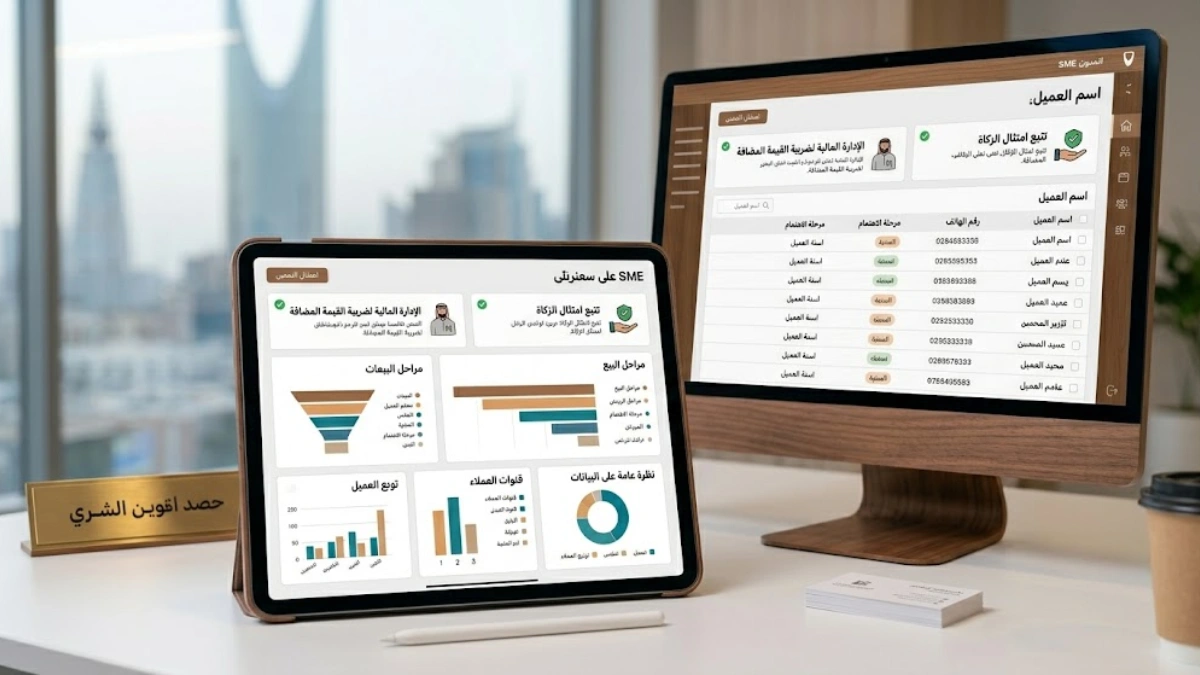
Small and medium-sized businesses in Saudi Arabia are rapidly adopting CRM software to improve customer management, automate sales processes, and increase business efficiency. As competition grows across retail, healthcare, real estate, logistics, education, and service industries, Saudi SMEs are investing in digital tools that help manage customer relationships more effectively.
However, businesses in Saudi Arabia require more than standard CRM functionality. Modern CRM systems must also support:
- Arabic language interfaces
- VAT invoicing
- ZATCA e-invoicing compliance
- Local business workflows
- Cloud accessibility
- Mobile access
Choosing the right CRM software can help SMEs improve customer service, increase sales, and simplify daily operations while staying compliant with Saudi regulations. This guide explains the best CRM software options for Saudi SMEs in 2026 and the key features businesses should look for before implementation.
What Is CRM Software?
CRM (Customer Relationship Management) software helps businesses manage customer interactions, sales pipelines, communication history, and marketing activities through one centralized system.
CRM systems typically include:
- Customer databases
- Lead management
- Sales tracking
- Email and WhatsApp integration
- Customer support tools
- Reporting and analytics
- Invoice and quotation management
Modern CRM platforms also integrate with ERP, accounting, and eCommerce systems.
Why Saudi SMEs Need CRM Software
Many small businesses still rely on spreadsheets or manual processes to track customer data. This often creates:
- Lost leads
- Delayed follow-ups
- Poor customer communication
- Inaccurate reporting
- Difficulty managing sales teams
CRM software helps SMEs:
- Improve customer relationships
- Automate sales processes
- Track leads efficiently
- Increase team productivity
- Improve customer retention
- Generate better business reports
Saudi businesses also benefit from CRM systems that support Arabic communication and local compliance requirements.
Key Features Saudi SMEs Should Look for in CRM Software
1. Arabic Language Interface
Arabic support is important for many Saudi businesses, especially companies working with local customers and employees.
CRM systems with Arabic interfaces help:
- Improve user adoption
- Simplify customer communication
- Generate Arabic invoices and quotations
- Support bilingual operations
Businesses should ensure the CRM provides proper right-to-left (RTL) interface support.
2. VAT & ZATCA Compliance
Saudi businesses must comply with:
- VAT regulations
- ZATCA e-invoicing requirements
- QR-code invoice generation
- Digital invoice archiving
CRM systems integrated with invoicing and accounting tools should support these compliance requirements.
3. Sales Pipeline Management
Sales pipeline tools help businesses track customer journeys from lead generation to final sales.
Key features include:
- Lead tracking
- Sales stages
- Task reminders
- Opportunity management
- Sales forecasting
This improves sales team productivity and follow-up efficiency.
4. WhatsApp and Communication Integration
WhatsApp is heavily used for business communication in Saudi Arabia.
Modern CRM systems should support:
- WhatsApp integration
- Email automation
- SMS notifications
- Customer communication history
This improves customer engagement and support.
5. Mobile Access
Sales teams and business owners often require remote CRM access.
Cloud CRM platforms provide:
- Mobile apps
- Real-time updates
- Remote access
- Team collaboration tools
This flexibility improves operational efficiency.
6. Reporting and Analytics
CRM analytics help SMEs monitor:
- Sales performance
- Customer behavior
- Marketing campaigns
- Employee productivity
- Revenue growth
Real-time dashboards support better business decisions.
Best CRM Software for Saudi SMEs
1. Zoho CRM
Zoho CRM is one of the most popular CRM solutions for SMEs because of its affordability and flexibility.
| Feature | Details |
|---|---|
| Best For | Small & medium businesses |
| Deployment | Cloud-Based |
| Arabic Support | Yes |
| VAT Support | Yes |
Advantages
- Affordable pricing
- Easy customization
- Mobile app support
- WhatsApp integration
- Strong automation tools
Disadvantages
- Advanced customization may require technical expertise
- Some advanced modules cost extra
Zoho CRM is ideal for SMEs looking for a budget-friendly cloud CRM.
2. Microsoft Dynamics 365 CRM
Microsoft Dynamics 365 combines CRM and ERP functionality within one platform.
| Feature | Details |
|---|---|
| Best For | Growing businesses |
| Deployment | Cloud & Hybrid |
| Arabic Support | Yes |
| VAT Support | Yes |
Advantages
- Microsoft ecosystem integration
- Advanced reporting
- AI-powered analytics
- Flexible customization
Disadvantages
- Higher licensing costs
- More complex setup
Dynamics 365 works well for businesses already using Microsoft products.
3. Salesforce CRM
Salesforce is one of the world’s leading CRM platforms.
| Feature | Details |
|---|---|
| Best For | Mid-sized & large businesses |
| Deployment | Cloud |
| Arabic Support | Available |
| VAT Support | Supported via integrations |
Advantages
- Advanced automation
- Strong scalability
- Extensive integrations
- Powerful analytics
Disadvantages
- Expensive for small businesses
- Requires implementation expertise
Salesforce is suitable for companies expecting rapid growth and advanced CRM needs.
4. HubSpot CRM
HubSpot CRM is popular among startups and service-based businesses.
| Feature | Details |
|---|---|
| Best For | Startups & service businesses |
| Deployment | Cloud |
| Arabic Support | Partial |
| VAT Support | Limited |
Advantages
- Easy to use
- Free basic version
- Good marketing tools
- Strong customer tracking
Disadvantages
- Limited Arabic functionality
- Advanced features require paid upgrades
HubSpot works well for businesses focused heavily on marketing and lead generation.
5. Odoo CRM
Odoo CRM is part of the broader Odoo ERP ecosystem.
| Feature | Details |
|---|---|
| Best For | SMEs & retail businesses |
| Deployment | Cloud & On-Premise |
| Arabic Support | Yes |
| VAT Support | Yes |
Advantages
- Affordable implementation
- Open-source flexibility
- ERP integration
- Arabic invoicing support
Disadvantages
- Requires experienced implementation partners
- Heavy customization may affect performance
Odoo is suitable for businesses wanting CRM and ERP integration together.
6. Freshsales CRM
Freshsales offers user-friendly CRM functionality for small businesses.
| Feature | Details |
|---|---|
| Best For | SMEs |
| Deployment | Cloud |
| Arabic Support | Available |
| VAT Support | Basic |
Advantages
- Easy implementation
- AI-powered lead scoring
- Affordable pricing
- Good mobile app
Disadvantages
- Limited enterprise functionality
- Smaller integration ecosystem
Freshsales is a good option for SMEs needing simple CRM functionality.
Cloud CRM vs On-Premise CRM
Cloud CRM
Cloud CRM is becoming more popular in Saudi Arabia because it offers:
- Lower upfront costs
- Faster deployment
- Remote accessibility
- Automatic updates
Most Saudi SMEs now prefer cloud-based CRM solutions.
On-Premise CRM
On-premise CRM provides:
- Full infrastructure control
- Internal data hosting
- Advanced customization
However, it also requires:
- Server infrastructure
- IT maintenance
- Higher implementation costs
Large enterprises may still prefer on-premise deployment for security reasons.
Benefits of CRM Software for Saudi SMEs
| Benefit | Description |
|---|---|
| Better Customer Management | Centralized customer data |
| Increased Sales Efficiency | Automated lead tracking |
| Improved Customer Service | Faster communication |
| Business Automation | Reduced manual work |
| Real-Time Reporting | Better decision-making |
| Mobile Accessibility | Remote team access |
| Compliance Support | VAT and invoicing integration |
| Scalability | Supports business growth |
How to Choose the Right CRM Software
Evaluate Business Size
Small businesses may prefer affordable CRM platforms like Zoho or Freshsales, while larger organizations may require Salesforce or Dynamics 365.
Check Arabic Language Support
CRM systems should provide proper Arabic interfaces and RTL support.
Verify VAT & ZATCA Integration
Businesses should ensure the CRM supports invoicing and tax compliance requirements.
Analyze Integration Capabilities
CRM software should integrate with:
- ERP systems
- Accounting software
- E-commerce platforms
Compare Pricing
Businesses should consider:
- User licensing
- Implementation costs
- Customization fees
- Support subscriptions
FAQs
Which CRM is best for Saudi SMEs?
Zoho CRM, Microsoft Dynamics 365, Odoo CRM, and Freshsales are among the best CRM options for Saudi SMEs.
Do CRM systems support Arabic language interfaces?
Yes, many modern CRM platforms support Arabic interfaces and bilingual operations.
What is ZATCA compliance in CRM software?
ZATCA compliance refers to support for Saudi e-invoicing, VAT reporting, QR-code invoices, and digital invoice storage.
Is cloud CRM better for SMEs?
Cloud CRM is usually more affordable and easier to manage for SMEs because it reduces infrastructure costs.
Can CRM software integrate with ERP systems?
Yes, many CRM systems integrate with ERP, accounting, inventory, and eCommerce platforms.
How much does CRM software cost in Saudi Arabia?
CRM pricing varies depending on users and features. Basic cloud CRM systems may start at affordable monthly subscription rates, while enterprise CRM platforms can become expensive.
Final Thoughts
CRM software is becoming essential for Saudi SMEs looking to improve customer management, increase sales efficiency, and automate business operations.
The best CRM systems for Saudi businesses should provide:
- Arabic language support
- VAT & ZATCA compliance
- Mobile accessibility
- Cloud flexibility
- Sales automation
- Integration capabilities
Zoho CRM, Dynamics 365, Salesforce, Odoo, and Freshsales are among the leading CRM platforms serving Saudi SMEs in 2026.
Businesses that choose CRM systems aligned with operational needs, compliance requirements, and long-term growth plans will gain stronger customer relationships and better business performance in Saudi Arabia’s growing digital economy.